How to host immersive Virtual Open Houses with real-time 3D
A step-by-step playbook to replace in-person visits with immersive 3D experiences that capture higher-quality leads and shorten the sales cycle.
Why a virtual open house matters today
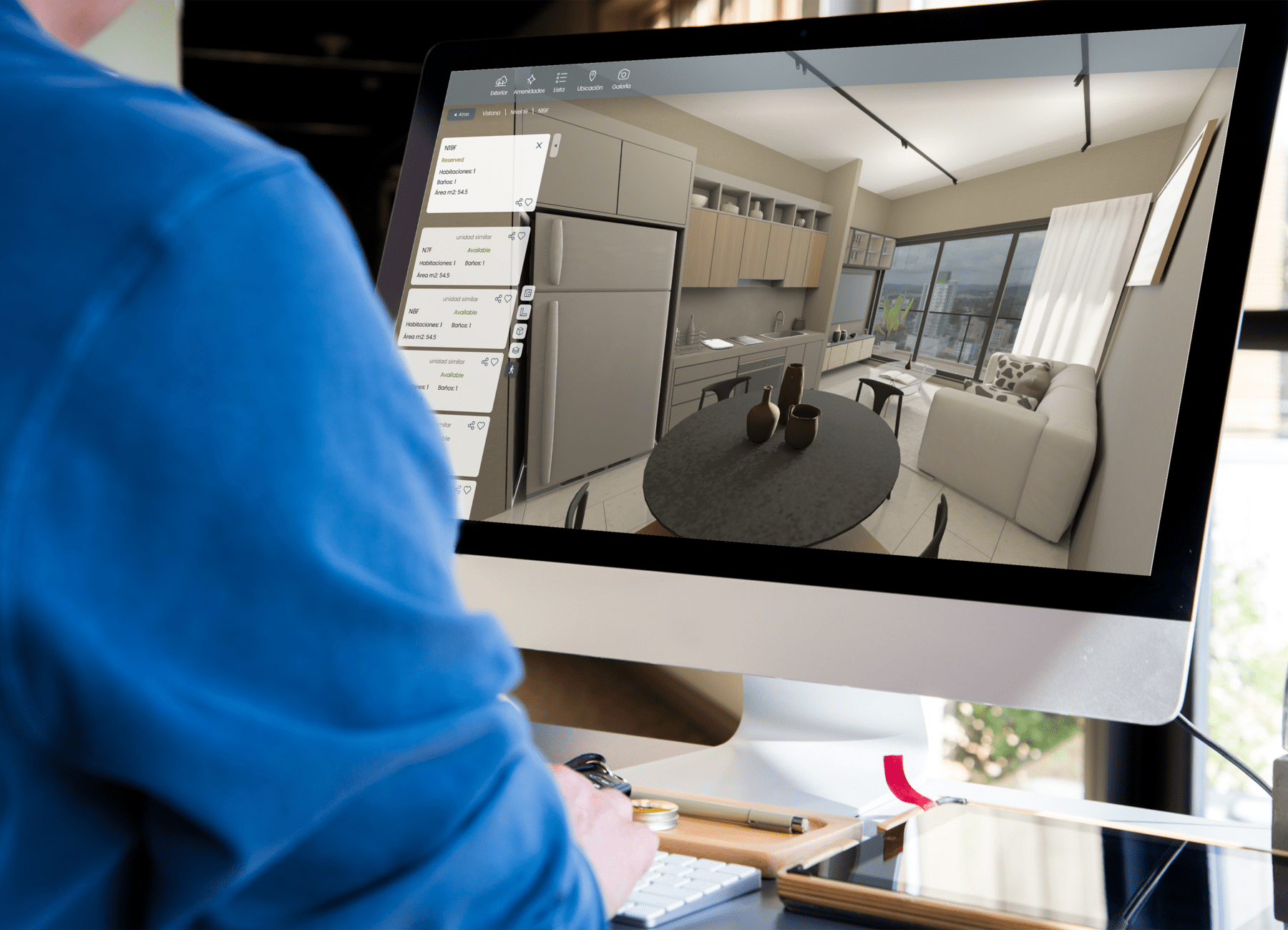
More than 70% of real estate buyers research a project online before ever visiting it. For pre-sale projects that figure climbs above 90%. A virtual open house powered by real-time 3D turns that passive research moment into a guided, immersive experience where the buyer 'lives' the project without traveling.
Unlike a pre-recorded video or a static 360° tour, real-time 3D lets you answer live: 'How does the living room look with dark flooring?', 'Which unit has a park view?', 'Which amenity is the largest?'. It recreates an in-person visit at scale.
6 steps to a successful virtual open house
1. Plan the event and define your audience
Pick a date and time that work for remote buyers (account for time zones if your project sells internationally). Decide whether it will be an open event for any interested lead or an exclusive session for a short list of qualified prospects. Cap the session at 45-60 minutes to keep attention high.
2. Promote the event with anticipation
Send invitations via email, WhatsApp and social media 7-10 days in advance. Lead with the value proposition: 'walk every corner of the project live, from your home, with nothing to install'. Include a direct link to the 3D Showroom and an RSVP form capturing name, email and phone.
3. Prepare your real-time 3D Showroom
Unlike a 360° tour (where you are stuck at fixed points), real-time 3D lets you walk freely through amenities, every unit type, the view from each balcony, and even swap finishes live. Rehearse the tour before the event: bookmark the highlights you want to showcase and prepare side-by-side comparisons between unit types.
4. Host like a guide, not a salesperson
Share your screen with the 3D Showroom open. Walk the project live while answering questions in real time. Let attendees 'drive' you: 'Can you show us the kitchen of type B from another angle?'. This genuine interactivity is impossible with pre-recorded videos or static renders.
5. Share a personalized link with tracking
Send each prospect a unique link to the 3D Showroom, ideally with the unit types they care most about already pre-selected. If your Showroom is integrated via SDK with your CRM, you can measure how long each lead navigates, which unit types they open and which finishes they try — data that lets you prioritize follow-up by real engagement instead of guesswork.
6. Measure, qualify and follow up
After the event send a follow-up email with: (a) a link to the 3D Showroom so they keep exploring on their own, (b) the project spec sheet, (c) a calendar link for a 1-to-1 follow-up. If your Showroom is integrated via SDK with your CRM, you can see exactly which units each prospect explored and prioritize follow-up based on real engagement.
What you gain with a 3D virtual open house
- Capture higher-quality leads: only truly interested buyers commit 45 minutes to an immersive session.
- Shorten the sales cycle: the buyer 'visits' the project without traveling, cutting a week of logistics.
- Sell to remote and international buyers with the same confidence as an in-person visit.
- Differentiate from competitors still relying on 2D renders, videos or 360° tours.
- Actionable data: know exactly which unit types, amenities and finishes generated the most interest in real time.
Ready for your next virtual open house?
We'll show you how it would work for your project in a 30-minute demo. Your first functional version can be live in 10 business days.
Book a demo
Talk to our advisors and discover how hauzd can transform your projects.
Sales and marketing tips
Explore our blog with resources, guides, and trends in real estate marketing.
Newsletter
Subscribe to receive the latest news, events, and updates from hauzd.